
Love Tester – Fun Love Calculator Game
Love has always sparked curiosity. People want answers. They want reassurance. They want fun. That is why the Love Tester remains popular across generations. A Love Tester is a simple love calculator game. Players enter two names. The game returns a match score. The result feels playful, exciting, and sometimes surprising. No deep commitment required. Just curiosity and fun. This type of online fun game started long before modern apps. Paper love tests existed in school notebooks. Kids drew hearts. They counted letters. Digital versions brought the idea to browsers and phones. Now, anyone can play instantly. Love Tester games thrive because they mix humor and emotion.
They feel personal. They feel social. Friends gather around one screen. Couples laugh at results. Crushes become less scary when numbers do the talking. Today’s Love Tester browser game adds more depth. Many versions include a compatibility test, personality test elements, and relationship quiz questions. These features turn a simple score into a richer experience. Platforms like SZ Games helped bring these experiences online in a polished, accessible way. The focus stays on fun, not pressure.
The History of Love Tester and Love Calculators
Love Tester – One Click Love Meter
Enter two names and tap the heart to reveal your love match.
Love testing did not start online. It started with human curiosity. In the early 20th century, love tests appeared in magazines. Readers answered questions about habits and feelings. Editors promised insight into romance. The tone stayed light and playful. Later, schoolyard love calculators became common. Students wrote names. They crossed out shared letters. They counted what remained. A percentage appeared. Logic did not matter. Fun did. Arcade machines in the 1960s added drama. You held hands. You pulled levers. A machine judged your love. These machines used simple sensors, not emotions. People still lined up.
Early computers turned love tests digital. Simple programs generated random match scores. The novelty felt magical. Computers felt smart back then. The internet changed everything. Browser games spread fast. Love Tester games became instant and global. No download needed. No cost required. Modern love calculators use algorithms. Some analyze names. Others use quiz answers. A few mix both. None claim scientific accuracy. That honesty keeps them safe and fun. Today’s versions focus on entertainment. Developers design them as online love games, not psychological tools. They emphasize humor, sharing, and replay value. That clear boundary protects players. It also keeps the games enjoyable.
What Is a Love Tester Game?
A Love Tester game measures perceived compatibility between two people. It does this through playful systems, not real relationship science. Most Love Tester games ask for names. Some add birthdates. Others include preferences or personality traits. The game then produces a match score. The score often ranges from 0 to 100 percent. Higher numbers suggest stronger compatibility. Lower numbers suggest challenges. The result usually includes a short message. Some games add visual elements. Hearts fill up. Meters shake. Animations respond to scores. These details boost excitement.
Many Love Tester games also include extra modes. A date compatibility test may focus on hobbies. A relationship quiz may ask about communication styles. A personality test may explore traits. These features increase replay value. Players try different name combinations. Friends test celebrities. Couples test each other for laughs. Importantly, games never claim accuracy. They exist as online fun games. That honesty matters. When players understand the purpose, enjoyment rises. Pressure disappears. Laughter takes over.
Gameplay Mechanics: How Love Tester Works
Love Tester gameplay stays simple by design. Anyone can play in seconds. First, players enter two names. The names can represent real people or fictional characters. Some games allow nicknames. Next, players press a button. The game calculates a result. This calculation may use predefined algorithms, random seeds, or quiz logic. Name-based systems often analyze letter patterns. They assign values. They combine results. The process stays hidden to preserve mystery. Quiz-based systems work differently. Players answer questions about preferences, habits, or attitudes. The game compares answers. Similar choices raise compatibility scores.
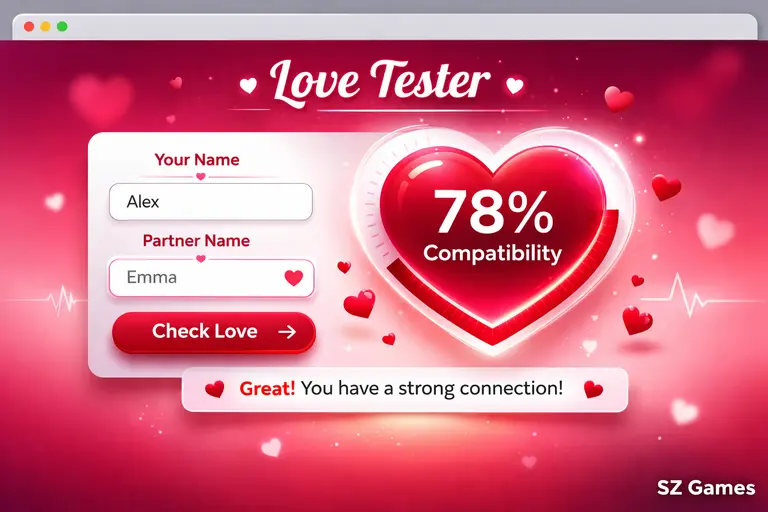
Hybrid systems mix both methods. They ask for names first. Then they add a short relationship quiz. This adds engagement. After calculation, the game shows the match score. Many games also display a short interpretation. These messages often include humor. Gameplay usually lasts under a minute. That short loop encourages replay. Players try again. They share results. They laugh. Games succeed because they remove barriers. No signup required. No skill needed. Just curiosity.
Controls and User Interface
Love Tester controls feel intuitive. That simplicity attracts all age groups. Most browser game versions use basic inputs. Players type names into text fields. They click or tap a button. Mobile versions support touch controls. The interface scales for small screens. Buttons stay large and readable. Animations respond instantly. Hearts bounce. Bars fill. Numbers tick upward. These effects build anticipation. Good it games keep text readable. Fonts stay clean. Colors stay soft. Red and pink dominate for emotional cues. Audio stays optional. Many players prefer silent play. Some games add light sound effects for fun. The best interfaces avoid clutter. They focus on the core action. Enter names. Get results. Share laughs. This design approach keeps the game accessible. Anyone can understand it within seconds.
Types of Love Tester and Compatibility Tests
Not all Love Tester games feel the same. Different types serve different moods.
Name-Based Love Tester
This version uses only names. It stays fast and simple. Perfect for casual fun.
Quiz-Based Relationship Quiz
This type asks questions. It explores preferences and habits. It feels more personal.
Personality Test Love Calculator
This version focuses on traits. Introversion. Humor. Communication. It feels thoughtful but still light.
Date Compatibility Test
This test explores shared interests. Movies. Food. Travel. It suits couples and friends.
Random Fun Match Score Games
These versions lean into humor. Results feel unpredictable. They work well for groups. Each type serves a purpose. Players choose based on mood. Variety keeps the genre fresh.
Tips to Enjoy Love Tester Games More
Love Tester games feel best when players manage expectations. Treat results as jokes, not judgments. That mindset unlocks fun. Try different scenarios. Test celebrity names. Test fictional characters. Creativity boosts enjoyment. Play with friends. Group reactions add value. Laughter multiplies. Use quiz-based versions for longer sessions. They spark conversations. Avoid overthinking scores. Numbers do not define relationships. Share results lightly. Screenshots work well. Social sharing fuels fun. Remember the goal. Entertainment comes first.
Social and Multiplayer Appeal
Love Tester games thrive in social settings. Friends gather around screens. Someone suggests a test. Names appear. Reactions follow. These games work well at parties. They break ice. They spark jokes. Online sharing extends reach. Players post match scores. Comments follow. Couples use games playfully. They compare results. They laugh together. This social layer explains long-term popularity. This games connect people through shared curiosity.
Educational and Emotional Value
Love Tester games also offer subtle learning moments. Quiz-based versions encourage self-reflection. Players think about preferences. Questions spark conversations. Partners discuss differences. Games normalize relationship talk. That openness helps younger players. The low-stakes format reduces pressure. Learning feels safe. These benefits remain secondary. Fun stays primary. Balance matters.
Safety, Privacy, and Responsible Play
Good Love Tester games respect privacy. They do not store names. They do not collect personal data. Players should avoid sharing sensitive information. Nicknames work fine. Parents should guide younger players. Emphasize entertainment value. Responsible design protects everyone. Transparency builds trust.
Frequently Asked Questions
Is it accurate?
No. It exists for entertainment. It does not measure real compatibility.
Can i predict relationships?
No. Real relationships depend on communication, trust, and effort.
Why do scores change?
Many games use random elements. This adds replay value.
Are these games safe?
Yes, when played on trusted sites. Avoid sharing private data.
Can couples enjoy it together?
Yes. Many couples use it for laughs and bonding.
Why Love Tester Games Stay Popular
Love Tester games tap into universal curiosity. Everyone wonders about connection. They stay simple. They stay light. They stay accessible. Browser games remove friction. Anyone can play instantly. Developers like SZ Games understand this balance. They focus on fun, clarity, and replay value. That approach keeps players returning.
Conclusion: Love Tester as Timeless Digital Fun
The Love Tester remains a classic online love game for a reason. It blends curiosity, humor, and social play into seconds of joy. It never promises truth. It offers entertainment. That honesty protects its charm. From schoolyard roots to browser game formats, it games evolved without losing soul. They still invite laughter. They still spark conversations. Use them lightly. Share them freely. Enjoy the moment. Sometimes, a simple match score can create the biggest smile.